
What We Can Know by Ian McEwan
Writers might be taking shortcuts these days with AI, but English author Ian McEwan is not one of them. His latest book, perhaps his penultimate one, is titled “What We Can Know.” The book group met on 10/23/25, and there was a spirited discussion as the group tried to answer ‘do we know anything’
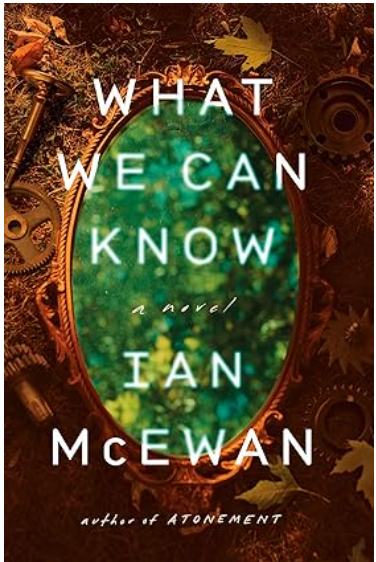
- except that we read this book!
The book is part social commentary, and “What We Can Know” is deliberately ambiguous! The story unwinds across two time-periods: 2014 and 2119. In between these epochs, rising seas have wiped out civilization as we know it today. The technology of the twenty -first century has been lost, along with much of the population, social conventions, and record-keeping. The book is set in the United Kingdom, and all travel to and from is by boat.
The plot centers on a lost manuscript/poem, the “Corona for Vivien”. This poem is revered by literature scholars in English departments, yet it is elusive in its meaning and purpose. Two university professors in 2119 try to piece together the literary tradition. Of course, they cannot know the full scope, so they make wrong inferences and are tortured by misinformation. But their scholarly counterparts in 2014 are equally befuddled and ill-informed.
The book group tried to detangle what motivated the Corona poem (love, jealousy, hubris). It takes a careful read to follow the literary threads across the 2 time periods. And, the group had a side discussion of whether writer McEwan had cast himself in this book, as the English professor, or the author of the Corona poem. Again, the discussion centered on “What We Can Know” (or not).
The group did come to know one thing- this is a great book. Some compared it to their other favorite McEwan read “On Chesil Beach.” “What We Can Know” is highly recommended, but keep in mind that title as you willingly turn the pages.
~Reviewed by Jane Gould